This project explored several topics related to Extension’s role in rural community, economic, and workforce development. They are described below.
Extension as a Transformative Intermediary in Rural Development
Extension does more than deliver evidence-based information and programs. Extension builds trust, which enables it to work collaboratively on solutions that magnify community strengths. Our work explored what it means for Extension to play this role and what it takes to do it well.
What Sets Extension Apart
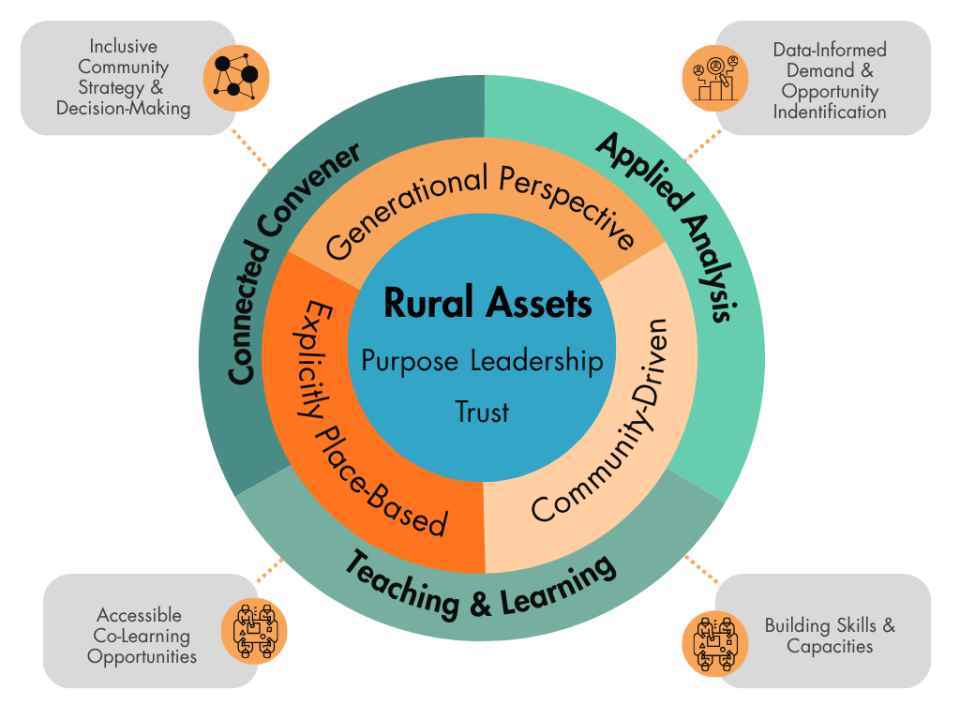
Extension brings three distinct approaches to its work. It takes a long-term, generational view. It follows the community’s lead in co-developing solutions. And it works in ways that prioritize local context. These qualities make Extension’s work durable and distinctive.
Three Ways Extension Works
Extension works in three main ways. It brings people together as a Connected Convener, it builds skills and knowledge through Teaching and Learning, and it helps communities use data through Applied Analysis. Each function was explored through real examples from five project sites.
Barriers to Reaching Extension’s Full Potential
Extension faces real challenges — including organizational silos, funding limitations, and difficulty communicating its impact.
The Case for a Shared Strategy
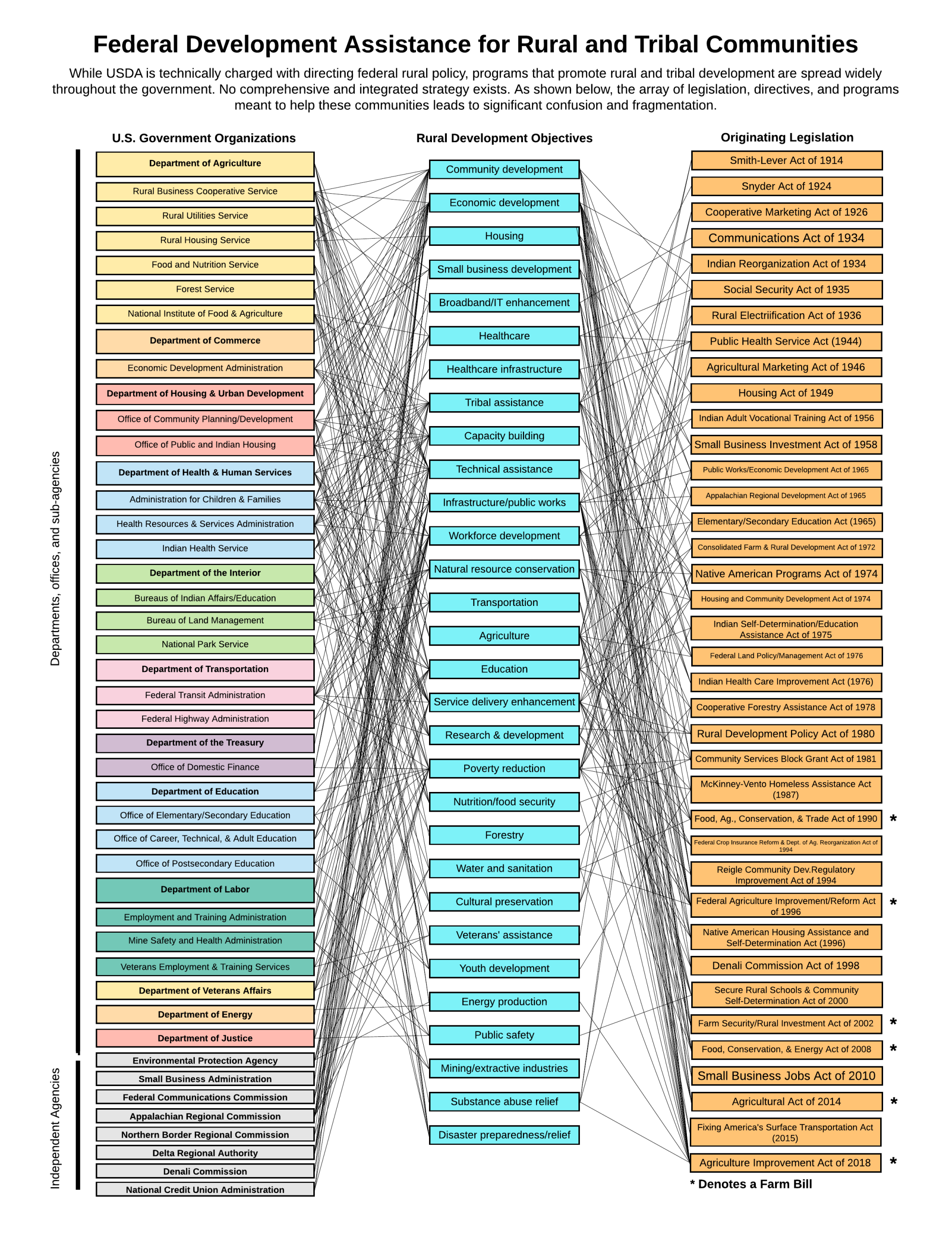
Federal rural development resources are spread across more than 400 programs and 35 pieces of legislation — making coordination a real challenge, especially for rural communities with limited staff. When partners work independently, they can end up working past each other instead of together. A shared strategy can help align efforts, clarify roles, and produce better community outcomes.
How States Shape Extension’s Role
State laws and policies play a big role in determining how Extension connects to state priorities. Some states explicitly link Extension to workforce development, rural prosperity, and higher education goals. Others leave Extension more loosely defined. We reviewed statutes in all 50 states and wrote a brief examining what those differences mean for Extension’s reach and impact.
How Extension is Funded and Governed
Extension is funded through a partnership among federal, state, and local governments as well as other sources. The mix of funding sources — and how that funding can be used — varies significantly from state to state. These differences affect how stable, flexible, and visible Extension is within each state. This topic is explored in the organizational study, which is based on surveys and interviews with Extension administrators as well as publicly available data.
Communicating What Extension Is
Extension is designed to adapt to local needs, which is one of its greatest strengths. But this flexibility has a downside — without a clear, consistent identity, Extension is hard to recognize as the powerful partner it can be.
Most people understand Extension only through their own limited experience with it. They may know one program well but have little idea of everything else Extension offers. A unified identity wouldn’t mean every state doing the same thing — it would mean having a shared, recognizable sense of what Extension is and what it does. Not just a list of programs, but a common approach that works across many different community needs.
Over the past two years, we took a closer look at Extension as a valuable but often overlooked resource — highlighting how it meets the varied needs of communities across states, especially in rural areas. The framework we developed describes what Extension does in clear, consistent terms that potential partners can recognize, making it easier to see how Extension can support rural development.
Recognizing What People Learn Through Extension
Extension reaches millions of people each year through free or low-cost programs. But that learning is not always documented in ways that make it easy to build on. Approaches like Credit for Prior Learning can help people use what they’ve learned through Extension to advance their formal education and careers. We provide resources and recommendations in the Recognizing Extension Learning brief.